Introduction
Have you ever wondered how long alcohol stays in your system? Whether it’s for health, safety, or just curiosity, it’s important to know. Alcohol doesn’t leave your body instantly — your liver takes time to break it down, and it can be detected in blood, urine, breath, saliva, and even hair for hours or days after drinking.
In this guide, we will explain how alcohol is processed in the body, the time it stays detectable in different tests, factors that affect its metabolism, and tips to stay safe. By the end, you’ll understand exactly how long alcohol remains in your system and what affects its clearance.
how long does alcohol stay in your system
The Basics of Alcohol Metabolism
-
Alcohol is absorbed into the bloodstream primarily through the stomach and small intestine.
-
The liver is the main organ responsible for breaking down alcohol using enzymes like alcohol dehydrogenase (ADH).
-
On average, the body metabolizes alcohol at a rate of 0.015 BAC per hour.
Example: If your blood alcohol concentration (BAC) peaks at 0.08%, it would take roughly 5–6 hours for your body to fully metabolize the alcohol.
Factors Affecting Alcohol Clearance
-
Body Weight and Composition: People with more body mass often process alcohol slightly faster.
-
Sex Differences: Women generally metabolize alcohol more slowly due to hormonal and enzyme differences.
-
Age: Metabolism can slow with age.
-
Food Intake: Eating before or while drinking slows absorption.
-
Liver Health: Liver disease or damage drastically affects metabolism.
Detection Windows: How Long Alcohol Stays in Different Tests
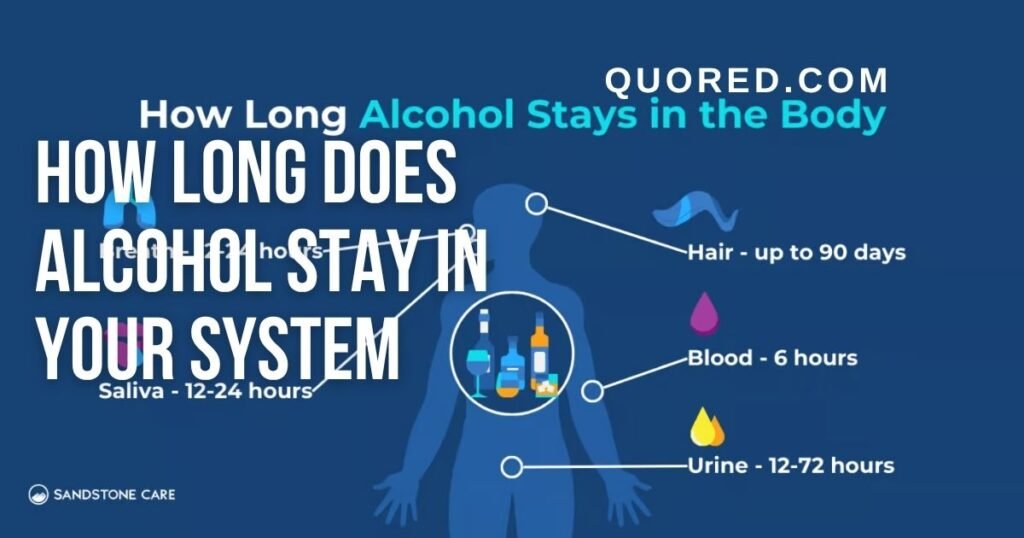
Blood
-
Alcohol can be detected in the blood for up to 12 hours after consumption.
-
Blood tests are typically used in medical settings and DUI checkpoints.
Breath
-
Breath tests detect alcohol for about 12–24 hours depending on the amount consumed.
-
Breathalyzers measure BAC levels to estimate recent consumption.
Urine
-
Alcohol is detectable in urine for 12–48 hours.
-
Advanced testing for alcohol metabolites like ethyl glucuronide (EtG) can detect alcohol up to 80 hours after drinking.
Saliva
-
Saliva tests detect alcohol for 12–24 hours, similar to breath tests.
-
Convenient but less commonly used for legal purposes.
Hair
-
Alcohol can be traced in hair for up to 90 days.
-
Hair testing doesn’t detect recent drinking but is used for monitoring long-term alcohol use.
Real-World Examples of Alcohol Metabolism
-
Example 1: A 160-pound man drinks 4 standard drinks (roughly 40–50 grams of alcohol). His BAC might peak at 0.08%, requiring about 5–6 hours to fully metabolize.
-
Example 2: A 120-pound woman consumes 2 drinks. Her BAC might reach 0.06%, metabolizing in roughly 3–4 hours.
Insight: Even small amounts of alcohol take time to leave your system, and factors like body weight and sex create notable differences.
Tips to Ensure Safe Alcohol Clearance
Responsible Drinking Strategies
-
Drink slowly and hydrate between drinks.
-
Eat food before and while drinking to slow absorption.
-
Monitor the number of drinks consumed — small amounts clear faster than binge drinking.
Misconceptions
-
Coffee, cold showers, or exercise do NOT speed up alcohol metabolism.
-
Only time and liver function dictate how quickly alcohol leaves your system.
LSI Keywords Used Naturally
-
alcohol metabolism
-
BAC levels
-
alcohol detection period
-
how long does alcohol stay in blood
-
alcohol clearance rate
-
alcohol in urine and breath
Conclusion
Understanding how long does alcohol stay in your system is vital for safety, health, and legal reasons. The safest approach is always time, moderation, and awareness.
CTA: Whether you’re planning to drive, undergo testing, or just stay healthy, track your drinking and allow your body enough time to metabolize alcohol fully. Knowing how long does alcohol stay in your system can prevent accidents, legal issues, and health complications. Drink responsibly and let time do the work!
(Frequently Asked Questions)
Q1: How long does alcohol stay in your system after one drink?
A: Usually 1–2 hours in blood and up to 12 hours in urine, depending on body weight and metabolism.
Q2: How long can a breathalyzer detect alcohol?
A: Approximately 12–24 hours after your last drink.
Q3: Can drinking water or coffee speed up alcohol metabolism?
A: No — hydration and stimulants don’t change the liver’s breakdown rate. Only time matters.
Q4: How long does alcohol stay in your urine for testing?
A: 12–48 hours for standard tests; up to 80 hours if testing for alcohol metabolites like EtG.
Q5: Does eating affect alcohol metabolism?
A: Yes, food slows absorption, reducing peak BAC and extending the time alcohol takes to reach full concentration.