Introduction
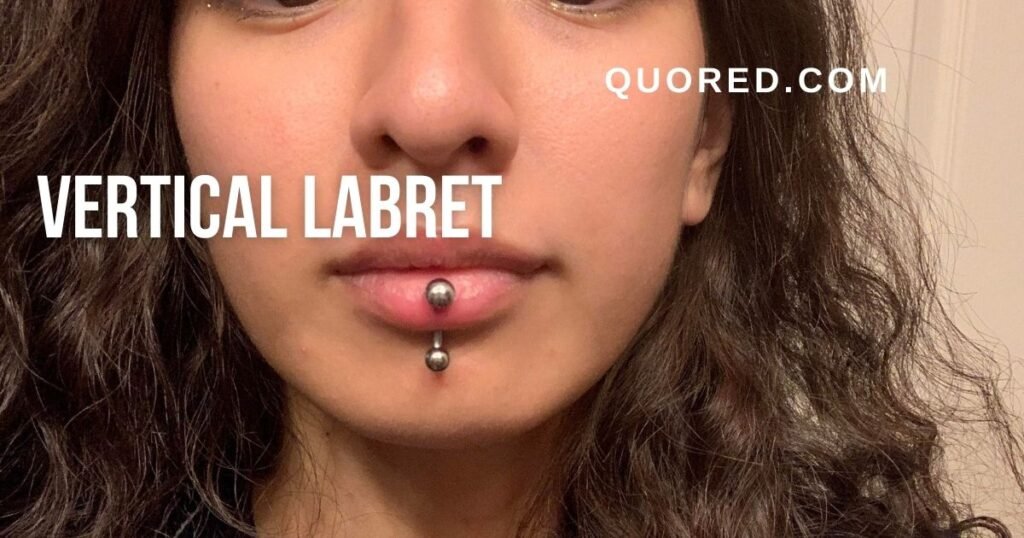
The vertical labret piercing has become one of the hottest lip piercings in recent years, especially on platforms like TikTok and Instagram. Its clean, elegant look — with one bead on the bottom lip and one on top — makes it stand out without being too extreme. Whether you’re drawn to it for aesthetic reasons, self-expression, or simply curiosity, it’s important to understand what the piercing involves before committing.
In this guide, we’ll break down pain levels, healing expectations, jewelry options, risks, aftercare steps, and real-world insights from people who have lived with a vertical labret. If you’re researching this piercing because you’re genuinely considering it, this article will help you go in confidently and fully informed.
What Is a Vertical Labret Piercing?
A vertical labret piercing goes vertically through the bottom lip. Unlike the traditional labret, which sits below the lip and inside the mouth, the vertical version doesn’t enter the oral cavity at all.
What Makes It Unique?
-
Both entry and exit points are visible externally.
-
It uses a curved barbell, which sits naturally with the lip’s shape.
-
It has less risk of tooth damage because jewelry doesn’t sit behind the teeth.
-
It heals faster than some oral piercings since there’s no friction from teeth or gums.
This makes it a favorite among people who want a lip piercing without worrying about enamel wear or gum recession.
Why the Vertical Labret Has Become So Popular
If you scroll through piercing hashtags, the vertical labret stands out. Here’s why:
1. It’s Visually Striking
The top bead sits right at the center of the lower lip, giving it a bold yet balanced look.
2. Social Media Influence
Many piercing influencers and alt-fashion content creators have given this piercing a spotlight.
3. Lower Dental Risk
Compared to snake bites, spider bites, or a standard labret, the vertical labret is safer for your teeth.
4. Compatible With Many Face Shapes
Whether your lips are full or slim, the piercing adapts well.
5. Quick Healing
Most people heal in 6 to 10 weeks, faster than many mouth-related piercings.
Vertical Labret Pain Level: What to Expect
Most people rate the pain as 5–6 out of 10. Here’s why:
-
The lip is fleshy and soft, so it pierces cleanly.
-
Pain usually lasts seconds.
-
Initial swelling is normal and may make the piercing feel more painful than it is.
Real-world example:
People often compare it to a sharp pinch followed by warmth. Several piercers note that clients usually say, “Wow, that was quicker than I expected.”
The swelling phase:
Expect your lip to feel “puffy” for the first 48–72 hours. Using a longer curved barbell initially helps accommodate swelling.
Vertical Labret Healing Time
Average healing time: 6–10 weeks
Factors that influence healing:
-
Your general health
-
How often you touch the piercing
-
Type of jewelry used
-
Professional skill of the piercer
Even though it sits outside the mouth, you still need to treat the piercing as delicate until fully healed.
Vertical Labret Piercing Procedure
Here’s what happens during a professional piercing session:
1. Consultation
Your piercer checks your lip thickness,cc
2. Marking the Entry & Exit Points
The alignment must be precise to keep the jewelry centered.
3. Sterilization
Your lip area is cleaned thoroughly.
4. Needle Insertion
A hollow, sterilized needle goes in vertically through the lip.
5. Jewelry Placement
A curved barbell (usually titanium) is inserted.
6. Aftercare Guidance
Good piercers send you home with written instructions.
The entire process takes 5–10 minutes.
Cost of a Vertical Labret Piercing
The cost varies depending on your region and the studio’s experience.
Typical price range:
$50–$100 for the piercing
+
$20–$60 for jewelry (high-quality titanium recommended)
Higher-end studios may charge more due to sterilization equipment, experience, and jewelry quality.
Best Jewelry for a Vertical Labret
The most popular option:
Curved Barbell
A curved barbell sits naturally along the lip’s shape and reduces pressure on the piercing.
Materials to choose:
-
Titanium (best for sensitive skin)
-
Surgical steel
-
Gold (14k or higher)
-
Niobium
Avoid cheap metals — they increase infection risk and irritation.
Pros of a Vertical Labret Piercing
1. No Contact With Teeth
This drastically reduces dental risks.
2. Heals Cleaner
Because it stays out of the mouth, there’s less risk of oral bacteria causing complications.
3. Aesthetically Bold
It adds symmetry and draws attention to the lips.
4. Lower Risk of Migration
Compared to some oral piercings, the vertical labret tends to stay in place.
5. Less Invasive Than Some Lip Piercings
The needle doesn’t go as deep into the inner tissue.
Cons of a Vertical Labret Piercing
1. Swelling Can Be Significant
Especially for those with naturally full lips.
2. Dryness & Cracking
Because it sits on the lip, winter weather or dehydration can irritate it.
3. Difficult to Hide
This is not a subtle piercing — great for some, challenging for others.
4. Not Ideal for Everyone
Thin or uniquely shaped lips may not suit this piercing.
5. Clothing Snags
Scarves, sweaters, or even makeup brushes can catch on the jewelry.
Vertical Labret Aftercare:
Proper aftercare determines how well it heals.
1. Clean with Saline Twice Daily
Use a sterile saline spray or mix your own (1/4 tsp of non-iodized salt + warm water).
2. Avoid Touching the Piercing
Unless you’re cleaning it — and only with clean hands.
3. Avoid Spicy, Acidic, and Oily Foods Early On
These can irritate your lip.
4. No Makeup Near the Piercing
Foundations, lip glosses, and lipsticks can introduce bacteria.
5. Avoid Smoking or Vaping
Nicotine slows healing.
6. Switch to a Shorter Barbell Later
Once swelling goes down, your piercer will downsize the jewelry.
7. Don’t Remove It Too Soon
Removing the jewelry too early can cause the hole to close instantly.
Common Healing Problems & Solutions
Swelling
Normal for the first 3 days.
Solution: cold compress (not ice directly), anti-inflammatories if approved.
Dryness or Cracking
Common in dry climates.
Solution: use a fragrance-free lip balm around — not on — the piercing.
Irritation Bumps
Often from friction or touching.
Solution: switch to titanium jewelry, avoid playing with the piercing.
Migration
Rare but possible if jewelry is too heavy or poorly placed.
Solution: see a piercer for evaluation.
Real-World Experiences:
Many people who’ve had the piercing say:
-
“It heals faster than I expected.”
-
“Lip swelling made me regret it at first, but it settled perfectly.”
-
“It looks incredible with minimal makeup.”
-
“It’s one of my favorite piercings because it’s unique.”
However, some mention challenges like:
-
Getting used to the feeling of the curved barbell on the lip
-
Dryness during cold months
-
Difficulty drinking from straws the first few days
Is the Vertical Labret Piercing Right for You?
This piercing is a great choice if you:
-
Love expressive facial piercings
-
Prefer external piercings over oral ones
-
Want to avoid dental risks
-
Have a balanced lower lip shape
-
Don’t mind attention — this piercing shows
You may want to choose another piercing if you:
-
Have very thin lips
-
Frequently pick at your lips
-
Play sports where facial impacts are common
-
Need a subtle or workplace-friendly piercing
Conclusion
The vertical labret piercing is stylish, bold, and surprisingly low-maintenance when done by a skilled professional. Its low dental risk, striking appearance, and quick healing time make it one of the most popular lip piercings today. But like any body modification, it’s important to choose an experienced piercer, follow aftercare instructions, and understand the risks before committing.
If you’re ready to express yourself in a new way, the vertical labret could be the perfect next step in your piercing journey.
Also Read: Revolver.News Guide – News, Opinions, and Multimedia Reporting
FAQs
Does the vertical labret hurt more than a regular labret?
Many say it’s similar, but healing is often easier because it doesn’t sit inside the mouth.
Can you kiss with a vertical labret?
Yes — but wait until it’s healed and go gently. Initial swelling can make kissing uncomfortable.
Will it damage my teeth?
Very unlikely. The jewelry doesn’t touch your teeth or gums.
Can it reject or migrate?
It’s less common than other lip piercings but still possible, especially with poor placement.
How soon can I change the jewelry?
Usually after 6–10 weeks, once your piercer confirms healing.