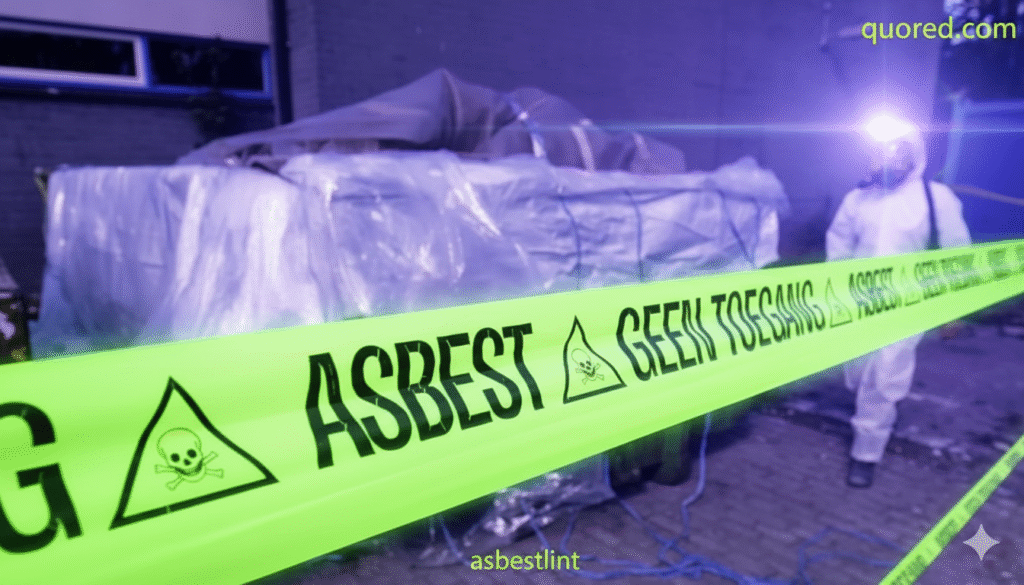
asbestlint: How to Recognise It, Why It Matters, and What to Do Immediately
Introduction
Spotting asbestlint on a worksite or in an old building can be alarming. The term covers both asbestos-containing tapes or insulation and the bright warning tape used to mark contaminated zones. This article explains how to identify asbestlint, why it’s a health risk, and the exact steps to take — clearly, safely, and in line with current guidance.
What exactly is “asbestlint”? (asbestlint meaning & types)
The phrase asbestlint is used in two main ways:
-
As warning or barrier tape labelled to mark asbestos hazards (e.g., yellow/black tape saying “ASBESTOS”).
-
As asbestos-containing tape or wrapping: old insulation or gasket tapes around pipes, boilers, or flues that actually contain asbestos fibers.
The difference matters: warning tape is a safety signal and not hazardous itself, whereas asbestos-containing tape can release dangerous fibres if disturbed. Government guidance and occupational agencies stress you must treat any suspect material as hazardous until lab testing confirms otherwise.
Why asbestlint (the material) is dangerous — a short science note (asbestos fibers & health)
Asbestos fibres are microscopic, durable, and can lodge deep in lung tissue. Long-term inhalation increases risk of diseases such as asbestosis, lung cancer and mesothelioma. There’s no known safe threshold for asbestos exposure; prevention focuses on avoiding airborne release altogether. That’s why friable materials (easily crumbled) or damaged tape are especially high-risk. Authoritative agencies (EPA, HSE, OSHA) emphasize non-disturbance and professional handling.
How to recognise asbestlint and other suspect asbestos materials (asbestos detection)
You can’t be 100% sure by sight, but these clues help:
-
Warning tape vs. material: bright yellow/black or red/white tape with “ASBESTOS” is a marker; it’s not hazardous itself.
-
Old insulation tapes and wraps: fibrous, felt-like, or cloth-like wraps around boilers, ducts, and pipes (common pre-1994 in the Netherlands).
-
Age of the building: if built before asbestos bans (e.g., Netherlands ban from 1994; EU-wide ban around 2005), higher probability.
-
Damage and friability: torn, powdery, crumbling material is more likely to release fibres.
-
Confirm with testing: only accredited laboratories can confirm asbestos via sampling. HSE and Government guidance recommend professional sampling for any suspected asbestos product.
Immediate actions if you find asbestlint (step-by-step emergency response)
If you discover asbestlint (either warning tape or suspect material) follow this clear, safe checklist:
-
Stop and avoid disturbing the area. Do not touch, sweep, or vacuum suspect materials.
-
Restrict access. Keep people and pets away; cordon off the site with non-disturbing barrier tape if safe to do so.
-
Notify the right people. Contact your site supervisor, building owner, or local municipality. For workplaces, notify safety officers per OSHA/HSE rules.
-
Call a licensed asbestos surveyor or abatement contractor to inspect and, if necessary, take samples. Only accredited labs should analyse samples.
-
Follow official instructions. Depending on volume and type, a formal removal (abatement) may require notifications or permits (e.g., demolition/ removal notifications in the Netherlands).
Remember: quick, calm action limits exposure. Do not try to remove suspect tape or insulation yourself.
Who should remove asbestlint and how removal works (licensed asbestos removal contractors)
Only licensed asbestos removal contractors should handle removal and disposal. Typical safe-removal steps include:
-
Set up containment zones and negative-pressure units to prevent fibre spread.
-
Workers use full PPE (respirators, disposable suits) and follow decontamination procedures.
-
Waste is double-bagged and labelled, transported to licensed disposal sites.
-
Clearance air testing confirms the area is safe before re-entry.
OSHA and HSE provide strict standards for workplace abatement; local laws (e.g., Government.nl in the Netherlands) describe mandatory reporting and permit steps. Failing to follow these can lead to enforcement and fines.
Safe disposal and where asbestlint goes (asbestos waste handling)
Asbestos waste must go to licensed asbestos disposal facilities. It cannot be mixed with regular municipal waste or burned. Disposal protocols vary by country but commonly require:
-
Proper packaging and labelling.
-
Transport by licensed haulers.
-
Disposal at special landfill cells authorised for hazardous materials.
Check local municipal rules: in the Netherlands, there are clear reporting and disposal routes, and many countries require manifests for hazardous waste.
Prevention, documentation, and compliance (asbestos survey report & communication)
To minimize surprises:
-
Conduct an asbestos survey (asbestinventarisatierapport) before renovation or demolition.
-
Maintain clear signage and barrier tape (asbestlint) at known hazard locations so workers know to avoid them.
-
Document all actions: inventory reports, removal certificates, and disposal manifests help prove compliance and protect health.
-
Train workers on recognition, reporting, and non-disturbance policies (OSHA/HSE training standards).
Conclusion
asbestlint is a clear signal: do not ignore it. Treat any suspect material as hazardous, protect people by restricting access, and call certified professionals for testing and removal. If you’d like, I can draft a ready-to-send notification email to your local municipality or a checklist to hand to a licensed asbestos surveyor — tell me your country and I’ll tailor it to local rules.
Also Read: i̇ns: A Practical Guide to Instagram Growth and Strategy
Common questions (FAQ)
What is asbestlint and why is it used on sites?
asbestlint refers to warning tape marking asbestos zones or to asbestos-containing tape used historically for insulation. Warning tape identifies hazardous areas; material tape may itself be hazardous if damaged.
Is asbestlint itself dangerous to touch or remove?
If it’s simply warning tape, no. But if it’s asbestos-containing material, touching or removing can release fibres and is dangerous — only licensed professionals should handle removal.
How can I tell if a tape or insulation contains asbestos?
Visual cues (fibrous texture, age, location) provide suspicion, but only accredited laboratory testing on a sample can confirm asbestos. Do not sample it yourself; call professionals.
What should I do immediately if I find asbestlint on my property?
Stop, cordon off, notify building owner/ authorities, and call a licensed asbestos surveyor or removal contractor. Follow local notification and permit rules.
Where does asbestlint and asbestos waste go for safe disposal?
To licensed hazardous-waste facilities authorised to accept asbestos. Packaging, transport, and manifests are usually mandated by law. Check local municipal or national guidelines for permitted sites.