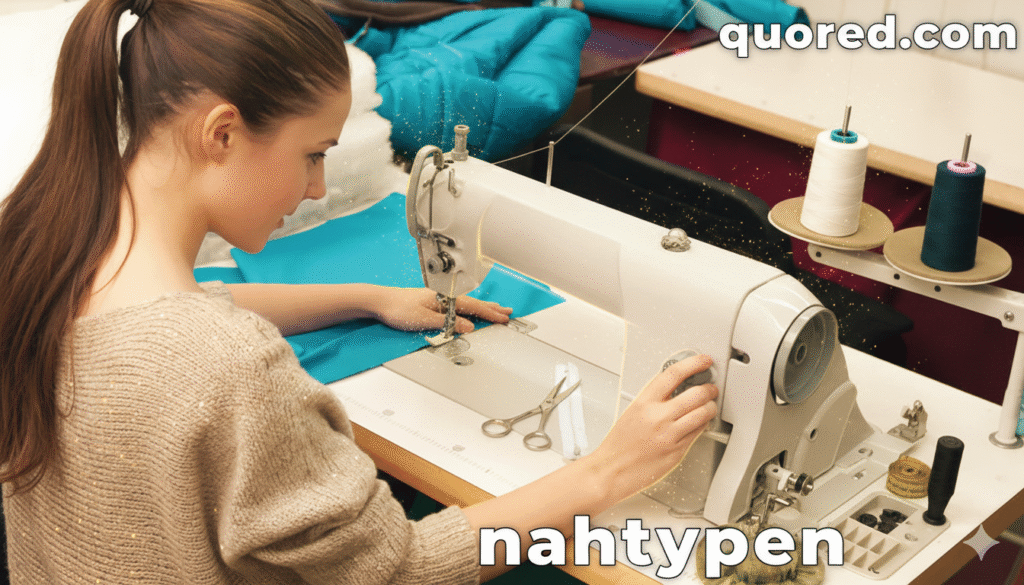
Nahttypen: A Complete Guide to the Different Types of Sewing Stitches
Sewing is an art built on precision, patience, and creativity. At the heart of every perfectly finished garment lies one essential element — the stitch, or as it’s known in German, “Naht.” The different Nahttypen (types of stitches) are what give clothing strength, beauty, and structure.
Whether you’re a beginner learning to thread your first needle or an experienced designer aiming for professional-quality finishes, understanding Nahttypen is key to mastering sewing.
In this guide, we’ll explore every major type of stitch — what they’re used for, when to apply them, and expert tips to make your seams both durable and elegant.
What Are Nahttypen?
The German word Nahttypen simply means “types of seams or stitches.” In sewing, these are the various ways fabrics are joined together using a needle and thread — by hand or with a machine.
Each type of stitch has a specific function and purpose. Some provide strength, some flexibility, others are decorative. Using the right Nahttyp for the right fabric can make the difference between a garment that lasts years and one that falls apart after a few washes.
Main Categories of Nahttypen
Sewing stitches can be broadly divided into two main categories:
1. Functional Stitches
These are designed for strength, structure, and durability. They hold fabric pieces together and are found in all types of garments.
2. Decorative Stitches
These stitches focus on aesthetics — adding detail, texture, or embellishment to enhance design appeal.
Let’s explore both categories in depth.
Common Functional Nahttypen (Structural Stitches)
1. Straight Stitch (Geradstich)
The most basic and widely used stitch in sewing.
It’s ideal for seams that don’t need to stretch — like cotton shirts, trousers, or woven fabrics.
Tips:
-
Use a medium stitch length (2.5–3 mm).
-
For strong seams, sew twice (backstitch) at the beginning and end.
Best For: Basic seams, hems, and topstitching.
2. Zigzag Stitch (Zickzacknaht)
A versatile stitch that moves from side to side in a zigzag pattern.
It’s often used to prevent fraying and to finish raw fabric edges.
Tips:
-
Adjust width and length based on fabric thickness.
-
Works great on stretchy fabrics.
Best For: Stretch materials, decorative edges, and seam finishing.
3. Overlock Stitch (Overlocknaht)
Used with an overlocker (serger) machine, this stitch trims, sews, and finishes edges all at once.
Why It’s Popular:
It gives garments a professional finish — like you’d find on store-bought clothes.
Best For: Knit fabrics, t-shirts, activewear, and industrial-grade sewing.
4. French Seam (Französische Naht)
A clean, enclosed seam used on delicate fabrics where raw edges might fray.
Steps:
-
Sew fabric wrong sides together first, trim the edge, then turn and sew again right sides together.
-
The raw edge gets hidden inside.
Best For: Sheer fabrics like chiffon, silk, or organza.
5. Flat-Felled Seam (Kappnaht)
One of the strongest seams — commonly seen on jeans and denim.
It encloses the raw edges within the seam for maximum durability.
Best For: Denim, outdoor gear, uniforms, and heavy-duty projects.
6. Blind Hem Stitch (Blindsaum)
Used when you want the hem to be nearly invisible from the outside.
Tip:
Requires a special blind hem foot attachment for sewing machines.
Best For: Dress trousers, skirts, formal wear.
7. Basting Stitch (Heftnaht)
A temporary stitch used to hold fabric pieces together before permanent stitching.
Handy Fact:
It’s easy to remove — perfect for checking fit before finalizing.
Best For: Temporary seams, fitting adjustments, and draping.
Decorative Nahttypen (For Style and Creativity)
1. Topstitch (Steppnaht)
A visible, strong stitch sewn on the outside of garments for decoration and reinforcement.
Examples:
-
Found on jeans, collars, and pockets.
-
Often uses thicker thread for emphasis.
2. Embroidery Stitches
These are purely aesthetic — like chain stitch, satin stitch, or blanket stitch — used for monograms, logos, or decorative borders.
Fun Fact:
Machine embroidery allows for thousands of design variations, from florals to geometric patterns.
3. Decorative Zigzag and Scallop Stitches
Modern sewing machines include creative stitch options for embellishments.
Best For: Crafting, quilting, or finishing kids’ clothing.
4. Smocking and Gathering Stitches
Used to add texture and volume to fabric by gathering small sections.
Best For: Dresses, blouses, and vintage-style garments.
Hand Stitching Nahttypen
Even in a world of advanced sewing machines, hand stitching remains essential for certain tasks.
1. Running Stitch
Simple and quick, used for gathering or hand basting.
2. Backstitch
Stronger than a running stitch — often used to close small seams or reinforce edges.
3. Slip Stitch
Invisible stitch used for hemming or attaching linings discreetly.
4. Blanket Stitch
Used to finish raw edges on blankets, felt projects, or decorative seams.
5. Whip Stitch
Perfect for sewing small fabric pieces or patches together by hand.
Specialized Industrial Nahttypen
Professionals in fashion and upholstery use specialized stitches for performance and durability.
-
Chain Stitch: Flexible, ideal for stretch fabrics and decorative seams.
-
Coverstitch: Common in sportswear for stretch hems.
-
Bartack Stitch: Reinforces stress points (pockets, zippers, belt loops).
-
Lockstitch: Most standard machines use this for general seams.
Choosing the Right Nahttyp for the Fabric
Every fabric has its own behavior — elasticity, texture, and weight all determine the best stitch type.
| Fabric Type | Recommended Nahttyp | Notes |
|---|---|---|
| Cotton | Straight or Zigzag | Easy to sew; medium stitch length works best |
| Knit | Overlock or Stretch Stitch | Avoid puckering with flexible seams |
| Denim | Flat-Felled or Double Stitch | Use heavy-duty needle and thread |
| Silk | French Seam | Prevents fraying and keeps fabric neat |
| Linen | Topstitch or Overlock | Reinforces edges and maintains drape |
Common Stitching Mistakes to Avoid
Even experts make errors — here’s how to prevent them:
-
Skipping stitches: Change your needle regularly.
-
Thread bunching: Check your tension settings.
-
Uneven seams: Use seam guides or fabric markers.
-
Fraying edges: Finish with zigzag or overlock stitch.
The Evolution of Nahttypen in Modern Sewing
From ancient hand sewing to computerized embroidery, stitching has evolved drastically.
Today’s machines offer hundreds of Nahttypen at the touch of a button — combining tradition and technology.
AI-assisted sewing systems can now even auto-adjust stitch tension and detect fabric type for flawless results.
The blend of craftsmanship and innovation keeps sewing both an art and a science.
Why Knowing Nahttypen Matters
Understanding Nahttypen doesn’t just make your projects look better — it makes them last longer.
Here’s why it’s worth learning:
-
Increases garment durability.
-
Helps tailor designs to fabric type.
-
Adds professional finishing touches.
-
Saves time and material waste.
Sewing is more than stitching — it’s storytelling through fabric.
Conclusion: Master the Art of Nahttypen
Mastering different Nahttypen is like learning a new language — one of creativity, patience, and precision. Each stitch tells a story of craftsmanship and care.
Whether you’re creating a delicate silk blouse or a rugged pair of jeans, choosing the right stitch transforms your project from simple to spectacular.
So the next time you sit by your sewing machine, remember: it’s not just thread connecting fabric — it’s your creativity connecting ideas.
Start small, stitch with intention, and let your Nahttypen define your style.
Also Read: Sodiceram: Smart Ceramics for Durable, Stylish Floors
FAQs About Nahttypen
1. What are the most common Nahttypen for beginners?
Start with straight and zigzag stitches — they cover most basic sewing needs.
2. Which stitch is strongest?
Flat-felled and double-stitched seams are the strongest, ideal for jeans and workwear.
3. Can I sew all fabrics with one type of stitch?
No — lightweight fabrics need fine stitches, while heavy fabrics require reinforced seams.
4. How can I make my stitches look more professional?
Use the correct tension, needle, and stitch length. Always press seams after sewing.
5. What’s the difference between a seam and a stitch?
A stitch is a single thread loop; a seam is a line of multiple stitches joining fabric pieces.