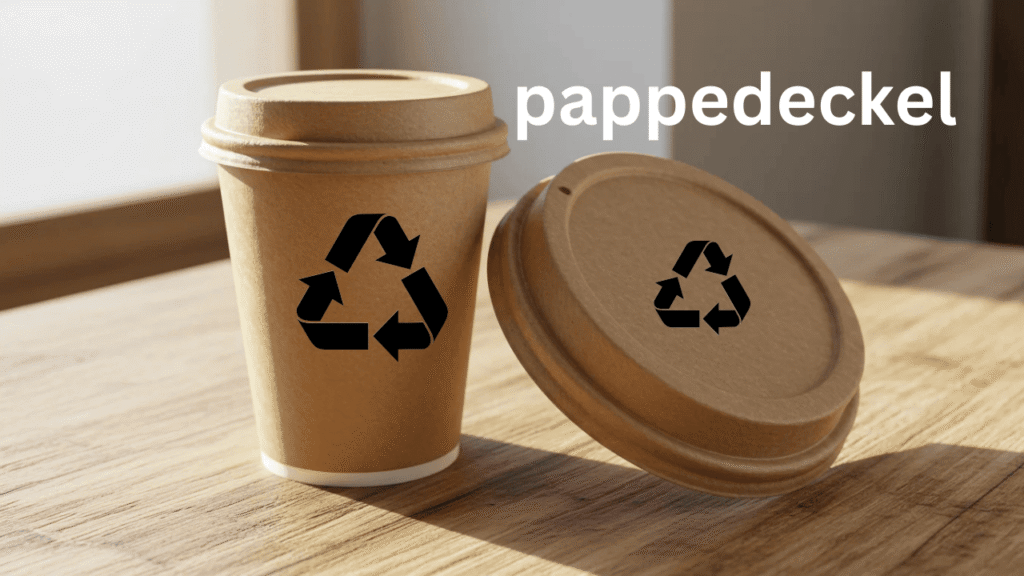
Pappedeckel — The Humble Cardboard Lid with a Big Role
Introduction
A single cardboard disc can save a drink, reduce plastic, and carry a brand message — that’s the quiet power of the pappedeckel. From beer coasters to eco-friendly cup lids and packaging covers, the pappedeckel combines material science, design, and sustainability. Let’s explore its meanings, uses, history, and how businesses can design better, greener lids.
What does pappedeckel mean? (definition & etymology)
At its simplest, pappedeckel is a German compound: Pappe (cardboard/paperboard) + Deckel (lid/cover). It literally means “cardboard lid” and can refer to anything from a beer coaster to a paperboard cover for cups or boxes. Major language resources list pappendeckel / pappedeckel as “cardboard lid” or “pasteboard.”
Historically the term appears in dictionaries and lexica such as Collins and Langenscheidt, reflecting both literal and regional uses.
Everyday uses: coaster, lid, packaging insert (practical applications)
Pappedeckel shows up in three practical contexts:
-
Beer coaster (bierdeckel): In bars the small round cardboard disc under a beer glass often doubles as a pappedeckel — protecting tables and carrying brewery branding.
-
Cup lid substitute: Disposable cardboard lids for hot drinks replace plastic; they can be die-cut to fit cup rims.
-
Packaging cover / insert: As protective lids for jars, boxes, or food containers, pappedeckel can stabilize products during shipping and display product info.
Real-life example: a small café swaps plastic drink lids for kraft paper pappedeckel with a notch for sipping — the change reduced plastic waste and became a talking point on social channels.
Design and material: what makes a good pappedeckel? (design & materials)
A pappedeckel must balance function and form:
-
Material choice: paperboard, pulpboard, or corrugated board depending on strength needs.
-
Die-cutting and embossing: clean edges and logo embossing elevate branding.
-
Thermal resistance: for hot beverages, a liner or insulating layer prevents soggy lids.
-
Seal and fit: snug fit for jars or cups to prevent spills.
Companies like IKEA and coffee chains such as Starbucks experiment with paperboard alternatives for lids — sometimes pairing an FSC-certified paperboard with a thin PLA liner to improve heat resistance and compostability. Mentioning FSC helps customers verify sustainable sourcing. (FSC, Starbucks, IKEA).
Sustainability: recyclable, compostable, or greenwashing?
One of the pappedeckel’s strongest selling points is its potential to be eco-friendly. But not all cardboard lids are equal.
-
Recyclable: Pure paperboard pappedeckel without plastic coatings are usually recyclable with paper waste.
-
Compostable: Some lids use biodegradable adhesives and no plastics — they can be industrially composted.
-
Watch for coatings: A plastic or wax coating hampers recyclability and may push material to landfill.
Organizations such as Greenpeace and certification schemes like FSC can guide brands toward responsible sourcing and manufacturing. Using certified fiber and avoiding non-recyclable liners makes the pappedeckel genuinely green rather than greenwashed.
Cultural notes: pappedeckel vs. bierdeckel and regional usage
In German-speaking regions you’ll hear both pappedeckel and bierdeckel. The nuance is simple: bierdeckel often implies the coaster used in pubs, while pappedeckel is a general term for any cardboard lid or cover. Language resources (Wiktionary, Duden) document these usages and regional variants.
Anecdote: in some Bavarian pubs, a witty bierdeckel message can be the evening’s conversation starter — showing how a tiny pappedeckel can carry culture as well as condensation.
Manufacturing and cost considerations (supply chain & production)
When designing or sourcing pappedeckel for a product line, businesses weigh:
-
Material cost: recycled fiber vs virgin paperboard.
-
Printing and branding: full-color printing ups the unit cost.
-
Production scale: die-cut molds and embossing add setup costs but drop per-unit price at scale.
-
Certifications: FSC or other eco-labels increase costs but attract eco-conscious customers.
Small brands often test prototypes via local print shops or packaging services; larger brands negotiate long-term runs to amortize tooling costs. Tools like a simple mockup (WordPress product pages, Shopify previews) help visualize the pappedeckel in context.
Tips for businesses: designing better pappedeckel (actionable checklist)
-
Choose recycled or FSC-certified paperboard.
-
Avoid plastic coatings; prefer water-based barriers if needed.
-
Test thermal performance for hot beverages.
-
Use clear branding: logo, ingredient or care info.
-
Consider die-cut windows or perforations for functionality.
-
A/B test designs to track engagement and conversions (A/B testing, CRO).
These steps help align product protection with marketing and sustainability goals.
Conclusion
Small in size but big in impact, the pappedeckel proves that thoughtful material choices and smart design can cut waste while boosting brand stories. If you’re a café, brewery, or product brand, test a kraft pappedeckel prototype this month: simple changes often lead to loyal customers and measurable sustainability wins.
Also Read: Virtual Meeting Etiquette: 12 Rules for Better Video Calls
Common questions answered (FAQ)
What does pappedeckel mean in German?
Pappedeckel literally means “cardboard lid” (Pappe = cardboard, Deckel = lid). It can mean a cardboard cover, beer coaster, or paperboard lid.
How is a pappedeckel used?
Uses include beer coasters (bierdeckel), cup lids for hot drinks, packaging inserts, and protective covers for jars and boxes.
Are pappedeckel lids recyclable and compostable?
They can be — if they’re made from uncoated paperboard and use biodegradable adhesives. Coatings and plastic liners reduce recyclability. Look for FSC certification and manufacturer compostability claims.
What is the difference between a pappedeckel and a bierdeckel?
A bierdeckel specifically refers to a beer coaster used in pubs; pappedeckel is broader and can denote any cardboard lid or cover.
How can businesses design eco-friendly pappedeckel packaging?
Use recycled/FSC-certified paperboard, avoid plastic coatings, design for reuse where possible, and validate claims through certifications and transparent supply chain information (e.g., sourcing documentation often encouraged by organizations like the Goethe-Institut’s cultural export guidance or NGO standards).