INTRODUCTION
The world constantly pushes us to be perfect—perfect homes, perfect bodies, perfect routines. But what if peace comes from embracing the opposite?
That’s the heart of wabi sabi, a gentle Japanese philosophy that celebrates imperfections, aging, simplicity, and the natural flow of life.
Instead of chasing flawless outcomes, wabi sabi encourages you to slow down, appreciate what is real, and find beauty in the unfinished, the worn-out, and the imperfect. It’s a mindset that feels refreshing, honest, and surprisingly modern.
MAIN BODY
What Is Wabi Sabi? The Meaning Explained
At its core, wabi sabi is about embracing imperfection and valuing authenticity.
It comes from two Japanese concepts:
-
Wabi: simplicity, humility, intentional living
-
Sabi: the beauty that comes with age, wear, and passage of time
Together, they form a worldview that sees beauty in:
-
cracks
-
wrinkles
-
handmade items
-
natural aging
-
incomplete work
-
fleeting moments
Wabi sabi is not just a design aesthetic — it’s a life philosophy.
The Origins of Wabi Sabi
Wabi sabi grew from Zen Buddhism, which values mindfulness, stillness, and acceptance.
Its roots trace back to the 14th century during Japanese tea ceremonies, where hosts used simple, imperfect pottery instead of luxurious, flawless porcelain.
This idea challenged traditional beauty norms.
Instead of chasing perfection, wabi sabi showed beauty in:
-
uneven textures
-
hand-crafted bowls
-
faded colors
-
organic shapes
-
small cracks caused by years of use
This philosophy encouraged people to stop competing, stop comparing, and start appreciating what they already have.
The Core Principles of Wabi Sabi
1. Nothing Is Perfect
Wabi sabi teaches that perfection is an illusion.
Instead of hiding flaws, you accept them.
Example: A wooden table with scratches tells a story. A brand-new surface tells nothing.
2. Nothing Lasts
Everything changes — seasons, relationships, emotions, materials.
Wabi sabi encourages us to embrace this natural flow.
Example: A ceramic cup that becomes slightly chipped still carries beauty.
3. Nothing Is Finished
Life is always “in progress.”
This mindset removes pressure and allows creativity to flourish.
Example: Artists leave pieces intentionally unfinished to honor this principle.
Wabi Sabi in Everyday Life
You don’t need Japanese pottery or minimalist decor to live wabi sabi.
It’s a mindset that shows up in small choices.
1. In Your Home
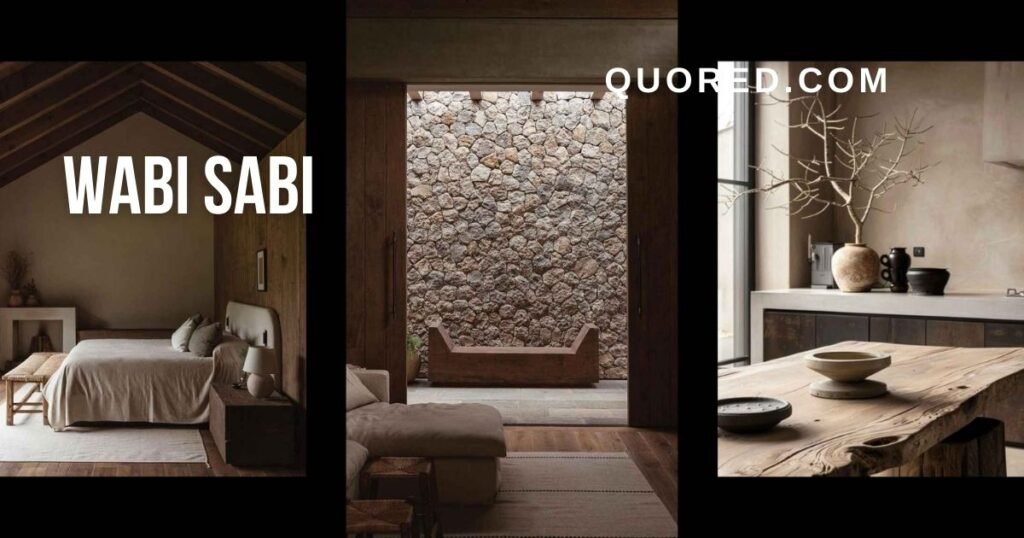
Wabi sabi design focuses on:
-
natural materials (wood, clay, linen)
-
earthy colors
-
handmade objects
-
uncluttered spaces
A home doesn’t need to look perfect; it needs to feel lived-in, warm, and real.
2. In Your Relationships
Wabi sabi encourages appreciating people as they are — flaws included.
This means:
-
giving grace
-
avoiding perfectionism
-
valuing authenticity over appearance
-
embracing aging, growth, and change
A “perfect” relationship doesn’t exist — but an honest one does.
3. In Your Work
Wabi sabi helps reduce stress by shifting focus from perfection to progress.
It teaches:
-
“done is better than perfect”
-
creativity grows through mistakes
-
imperfection builds character
This leads to more sustainable productivity.
4. In Personal Growth
Wabi sabi reminds you that:
-
healing isn’t linear
-
growth takes time
-
flaws make you human
Instead of chasing a flawless life, it teaches you to appreciate your unique journey.
Real-World Examples of Wabi Sabi
Example 1 — Kintsugi (Golden Repair)
In Japan, broken pottery is repaired with powdered gold.
Instead of hiding cracks, the gold highlights them.
It symbolizes:
-
strength through suffering
-
beauty after damage
-
acceptance of past experiences
Example 2 — Slow Living Movement
People worldwide follow wabi sabi through:
-
digital minimalism
-
mindful routines
-
slower consumption
-
simple pleasures
This aligns with research showing that slowing down reduces anxiety and boosts wellbeing.
Example 3 — Handmade Crafts Booming Globally
According to global design trends, demand for handmade and imperfect items continues to rise.
Why? Because people connect emotionally with authenticity.
Wabi sabi predicts this shift perfectly.
Wabi Sabi in Modern Life — Why It Matters Today
The world is louder, faster, and more competitive than ever.
Wabi sabi brings balance.
1. Reduces Anxiety
Letting go of perfection reduces pressure and increases peace.
2. Improves Mental Health
Accepting life “as it is” helps reduce comparison and boost self-esteem.
3. Encourages Sustainable Living
Wabi sabi promotes:
-
repairing instead of replacing
-
buying fewer but meaningful items
-
valuing long-lasting materials
4. Builds Authenticity
Wabi sabi helps you express your true self without filters.
How to Practice Wabi Sabi Daily
Here are practical tips anyone can apply:
-
Keep only what brings joy or meaning.
-
Accept imperfections in your home and yourself.
-
Enjoy quiet mornings or slow evenings.
-
Choose natural textures and materials.
-
Celebrate aging — in objects and in life.
-
Repair things instead of throwing them away.
-
Appreciate small, everyday moments.
Living wabi sabi is not about decorating your home; it’s about shifting your mindset.
CONCLUSION
This is a beautiful reminder that life doesn’t need to be perfect to be meaningful.
It encourages you to slow down, appreciate what you have, and see beauty in the ordinary.
Whether it’s a slightly chipped mug, an unfinished project, or a moment of stillness, wabi sabi helps you connect with authenticity and peace.
If you’re tired of chasing perfection, start embracing wabi sabi — a gentler, more honest way to live.
Ready to explore more life-changing concepts? Just tell me your next topic!
Also Read: Revolver.News Guide – News, Opinions, and Multimedia Reporting
FAQs
1This is only a design style?
No — this is a philosophy first and a design style second. It’s a way of viewing life, beauty, and imperfection.
2. Can I practice this without changing my home?
Absolutely. this is more about mindset than decor. You can practice acceptance, simplicity, and mindfulness anywhere.
3 This is the same as minimalism?
Not exactly. Minimalism removes things to find clarity.
This is embraces what you already have — even if it’s imperfect.
4. What is the difference between this?
Wabi means simplicity and humility.
Sabi means aging, impermanence, and natural wear.
5. Can the improve mental health?
Yes. Research shows that acceptance-based philosophies reduce stress, anxiety, and perfectionism.